
Q: Mr. Tan, I know you’re also a father. Do you think your child is happy?
A: No, he isn’t.
Q: Do you feel he’s not happy, or is he “actually” unhappy?
A: He himself, to a certain extent, is not happy. I think the most direct reason kids today aren’t happy is due to societal hierarchy. Society offers children more diversity, which in theory is a good thing. But because of that diversity, children’s thinking is no longer simple. In the past, drinking water made us happy. Now they need soda or juice to feel satisfied. So the question becomes: how do we simplify the problems children face?
Q: In this musical, what will your creative focus be?
A: First, I’ll be placing greater emphasis on musicality, and especially the relationship between music, children, and musical theatre. These three elements will be deeply integrated this time.
Musicals have their own conventions, and my challenge is how to simplify that complexity. That’s the task I’ve set for myself.
I’ve never been fixated on just writing a “children’s musical.” What I really care about is creating something both children and parents can relate to—something memorable and widely appreciated. That’s my foundation this time.
On another level, I’m focusing more on story development. I want the music to naturally drive the narrative, not just dominate it. So yes, this has truly been a challenge for me.
Q: So is it fair to say that this project is quite different from your past work?
A: Absolutely. Director Gu and I have worked together for almost six years, and this time it’s a shared challenge—we’re both pushing past our limits.
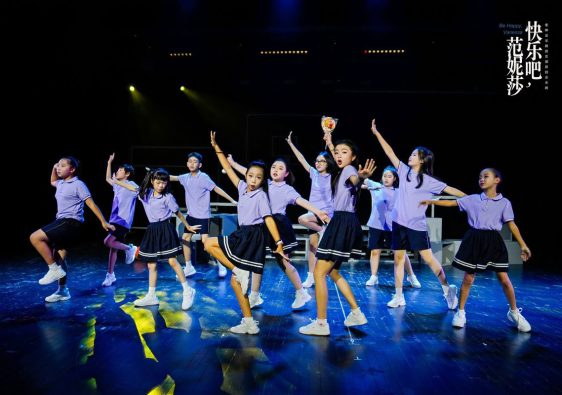
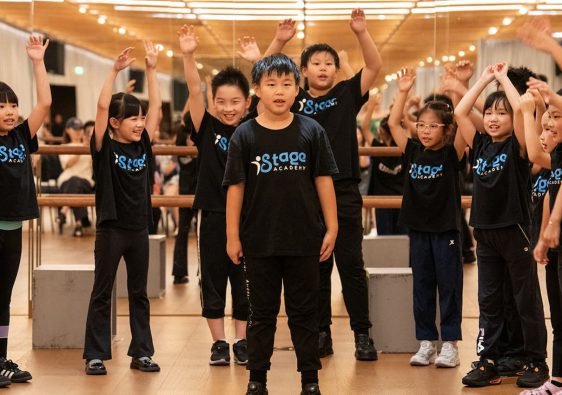
This time, we’ve returned the stage of the musical to the children. The question is: how do we connect that professionalism with the children, so they can shine on stage? That’s something we’ve been constantly exploring. The ultimate goal is to let children tell their own stories. In that sense, both of us have pushed ourselves to the limit creatively.
Q: Do you think *Vanessa* as a whole represents a certain quality of Chinese-language musicals today?
A: That’s a pretty big question. Director Gu and I have long wanted to create something that breaks through our own boundaries. In terms of this independent work, I think we’ve done that. It offers audiences a different world to see. But to say it represents Chinese-language musicals as a whole might be a stretch.
We’ve also been dedicated to finding a way to bring Chinese musical theatre to the global stage. Whether we can go international is something that still needs to be tested.
Q: Since the cast of *Vanessa* consists mainly of children, did you face difficulties composing songs for them?
A: I think we need to approach it with a different mindset. If you demand professional-level technique from children, that’s a false proposition.
Music and children have an instinctive connection. What I hope is that this emotional connection can be conveyed through the music—that the kids can express themselves through it. I want their joy, and the joy within this story, to reach others. Even if someone just watches the show and feels the energy and movement on stage, that alone would fulfill the goal of this musical.
Q: So the motivation behind your and the director’s creative work is really to give more to today’s youth?
A: Yes. Today’s values are different from those of the past. It used to be black-and-white; now it’s more about feeling. So we want to give music back to the children. Break down all the technical barriers and let their raw, instinctive emotions burst forth on stage. I think *Vanessa* has that charm.
A group of children from the East are performing cutting-edge, internationally-flavored music and telling their own stories. That’s a powerful expression of cultural identity—and it already places us on the world stage.
Q: What kind of experience do you think *Vanessa* offers parents?
A: I think the point of *Vanessa* isn’t to lecture parents on what to do, but rather to present the current mindset of children through the eyes of children, helping parents understand their kids better.
Even if parents spend time with their children daily, they don’t necessarily *understand* them. That’s why we’re doing this. We’re not here to teach or preach—that’s not what Vanessa is about. The core is intuitive emotional perception, which creates a bridge between children and adults. If parents can feel that, they themselves might undergo a transformation.
For instance, society is placing kids and parents under extreme pressure to constantly achieve more. But maybe it’s time to take a different perspective—to see the beauty in life, to feel the music, and to find joy in the moment.
Q: Did you encounter any difficulties during the creative process?
A: I remember two major ones. The first was with Song No. 7. It’s about our second female lead, Vanessa Jr., a child with a physical disability caused by a car accident. Despite this, she dreams of becoming a ballet dancer.
When she stands up to perform ballet, the director and I had a major disagreement. I thought it was fine to give her a traditional ballet segment. But the director insisted on going beyond that—he wanted something imaginative, with a completely different musical style. He shared many wild ideas, and at the time I was stunned. I wondered if it would even be possible on stage. Could a child really dance ballet in that way?
But once I stepped into the rehearsal room and saw what the children could do, I realized the stage truly is a place for dreaming. If you dare to imagine it, you can turn the impossible into possible—and that’s a miracle.
The second difficulty was more technical. I fell into a creative habit of writing songs with wide vocal ranges. That allows for more emotional highs and lows, which are important for this musical since there’s a live band involved. Almost every number is a big song. So we had to tailor each song’s key to each child’s voice.
We were constantly adjusting keys. One day I even asked the director, “Can we tally them all up again? I’m lost.” But looking back, these challenges were actually fun. Once the kids performed everything, all the problems disappeared. The theatre really *is* a place where dreams are made. I can’t wait for *Vanessa* to deliver a magical performance for the audience.
Q: Lastly, could you give a shoutout for “Vanessa: Be Happy”?
A: “Vanessa” may not be a conventional musical in the commercial sense. If you’re looking for celebrity actors, sorry—this isn’t that kind of show. But if you want to see a group of adorable kids, feel their joy, and witness the beauty of companionship between children and their parents, especially for young families—then you’ll find it here. You’ll feel that happiness radiating from the stage. And I hope *Vanessa* brings endless beauty and becomes a truly meaningful gift for every child.